FITNESS GUIDE
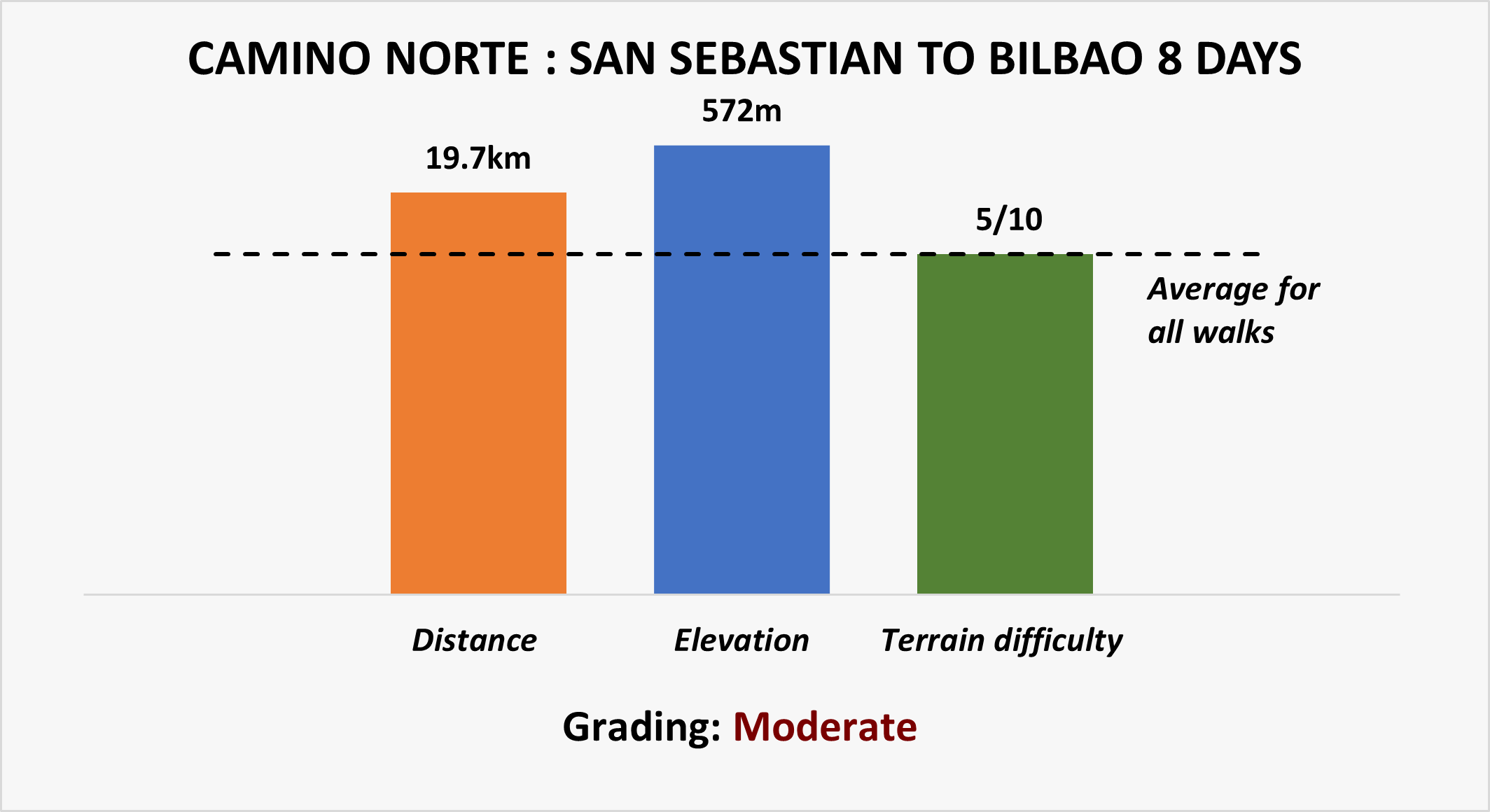
It’s well worth investing some time and effort preparing for your walking holiday. The graph shows the average daily distance, elevation and terrain difficulty for your hike. The dotted line indicates the average across all our walks, which will give you a feel for how challenging your walk is compared to all – and the recommended type, and amount, of preparation needed. Of course, you can adapt this according to your existing fitness levels and lifestyle.
The graph and the information below can be used in conjunction with the fitness guide to help you prepare for your walking adventure. Across all walks, average daily distance is 16.8km, average daily elevation is 448m, average terrain difficulty is 5/10.
DISTANCE - ABOVE AVERAGE
Distance training is a major consideration in your overall training program. As you progress, incorporate longer walks into your training plan. Schedule one or two long walks each week, gradually increasing the distance until you can comfortably cover 17-25 km in a single day. Additionally, also include back-to-back walks to simulate walking on consecutive days. This helps your body adapt to the demands of walking for multiple days in a row. Take every opportunity you can to walk. If you have a fitness watch or phone, you should try to reach >15,000 steps every day. Ensure you can comfortably walk the average distance per day displayed in the graph, at least one month before you undertake your hike.
ELEVATION - ABOVE AVERAGE
Elevation is notable for its coastal and mountainous landscape, featuring frequent climbs and descents.
TERRAIN - MOUNTAINOUS / UNDULATING
MOUNTAINOUS / UNDULATING TERRAIN
As terrain associated with mountain climbs is often somewhat uneven and rocky, balancing and core exercises are vital.
Try to also include some form of elevation in more than 50% of your walking and prioritise resistance training, whilst incorporating stairs anytime you can. Walking up mountains or hills, up and down stairs at work, or up and down at a local oval with a grandstand is incredibly useful. Elevation is often where walkers encounter problems not distance, as it uses an entirely different set of muscles to everyday flat walking. Concentrate on doing lots of squats and lunges to build your glute muscles.



 SELF GUIDED
 8 DAYS
 Moderate to Challenging









Marla C
When you’re already on the ground you don’t even need the trail notes/ walking routes. You just get on with the flow. You will never get lost. If you plan to do the Camino de Santiago, look no further than Auswalk. Seamless and you are in good hands.
Ray A
One of best experiences of our lives, and made so much easier and stressless adventure.
Richard F
Well organised and helpful staff made our first Camino walk very enjoyable.