


FITNESS GUIDE
It’s well worth investing some time and effort preparing for your walking holiday. The graph shows the average daily distance, elevation, and terrain difficulty for your hike. The dotted line indicates the average across all our walks, which will give you a feel for how challenging your walk is compared to all walks – and the recommended type and amount, of preparation needed. Of course, you can adapt this according to your existing fitness levels and lifestyle.
The graph and the information below can be used in conjunction with the fitness guide to help you prepare for your walking adventure. Across all walks, the average daily distance is 16.8 km, average daily elevation is 448 m, the average terrain difficulty is 5/10.
DISTANCE - ABOVE AVERAGE
Elevation training is a major consideration in your overall training program. You must include walks with serious hill climbs. If you do not have access to hills, it essential to replicate the elevation level you will be undertaking in any way possible, via a treadmill or stair climber. Prioritising resistance training assumes heightened significance in this context, emphasizing the incorporation of stair climbing whenever feasible. Walking up and down stairs at work, at a local oval with a grandstand, or up and down small hills, boring as that sounds, is incredibly useful. Elevation is the chief walk killer, not distance, as it uses an entirely different set of muscles.
ELEVATION - BELOW AVERAGE
Elevation is not a major consideration regarding how you train. However, you should still incorporate some form of resistance training as it will increase your endurance.
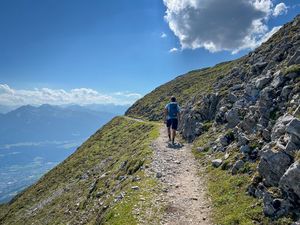
TERRAIN - UNEVEN TERRAIN
Preparation for hiking on uneven terrain demands a nuanced blend of physical and mental readiness. Commence your regimen with balance-enhancing exercises, such as one-legged stands and stability ball workouts, laying a foundational groundwork for stability and coordination. Strengthening the lower body is pivotal, achieved through the incorporation of squats, lunges, and step-ups to enhance both stability and power. Gradually increase the complexity of the terrain on which you walk, moving from gravel paths to rocky trails. Cultivate mindfulness during your practice, directing focused attention to both your immediate surroundings and precise foot placement. The importance of suitable footwear cannot be overstated; prioritise options that offer robust support and reliable grip to navigate varying terrains with confidence. Build endurance through consistent hikes, progressively increasing distance and difficulty.