


-300x200.jpg)
-300x200.jpg)
-300x200.jpg)
-300x200.jpg)

-300x200.jpg)

-300x200.jpg)
-300x200.jpg)
-300x200.jpg)
-300x200.jpg)
-300x200.jpg)




-300x200.jpg)





-300x200.jpg)
-300x200.jpg)
Japan has been a country of walkers and pilgrims for well over a thousand years. Long before the bullet train, emperors, monks and samurai wore paths into these mountains, and many of those trails are still walked today. Here are the nine best multi-day hikes in Japan, ranked from our top pick down, with the trail facts and who each walk suits best.
-900x645.jpg)
1. Kumano Kodo
The Kumano Kodo is a pilgrimage route through the sacred Kumano mountains on the Kii Peninsula, and it has drawn emperors, aristocrats and ordinary travellers to the Kumano Grand Shrines since 794 AD. It's one of only two UNESCO World Heritage-listed pilgrimage trails in the world, alongside the Camino de Santiago, and walkers who complete both can earn the Dual Pilgrim certificate, jointly recognised by Japanese and Spanish authorities.
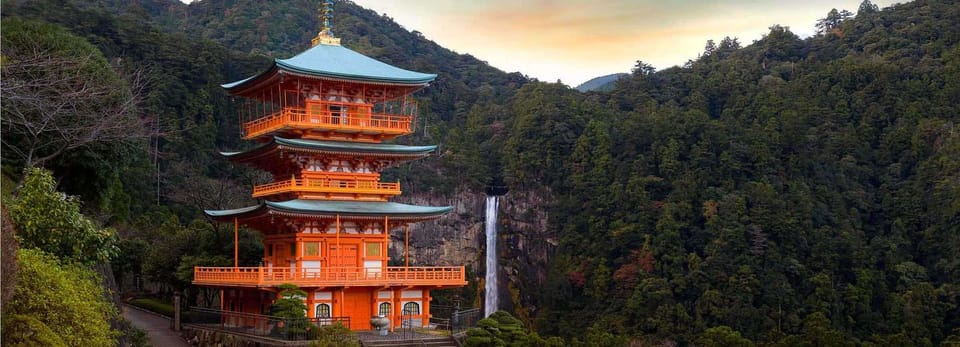
The Nakahechi route runs through dense cedar forest and past stone-paved paths worn smooth by twelve centuries of foot traffic. Nachi Waterfall, the tallest in Japan, sits along the way, and the Grand Shrines at Hongu and Nachi-san mark the pilgrimage's end.
Each night ends in an onsen town, with kaiseki dinners and outdoor hot spring baths under the stars. A rest day in Hongu breaks up the walk, with an optional river boat trip for tired legs.
Trail snapshot
- UNESCO World Heritage-listed since 2004
- Route in continuous use since 794 AD
- Nachi Waterfall, Japan's tallest, sits directly on the trail
Who we recommend it for: Walkers wanting the classic, bucket-list Japan pilgrimage experience, whether that's a first multi-day walk in the country or a return trip to complete the Dual Pilgrim certificate. Itineraries run from 5 to 10 days, so it also suits both shorter breaks and longer, immersive trips.
Explore Auswalk's Kumano Kodo walking holidays.
2. Nakasendo Way
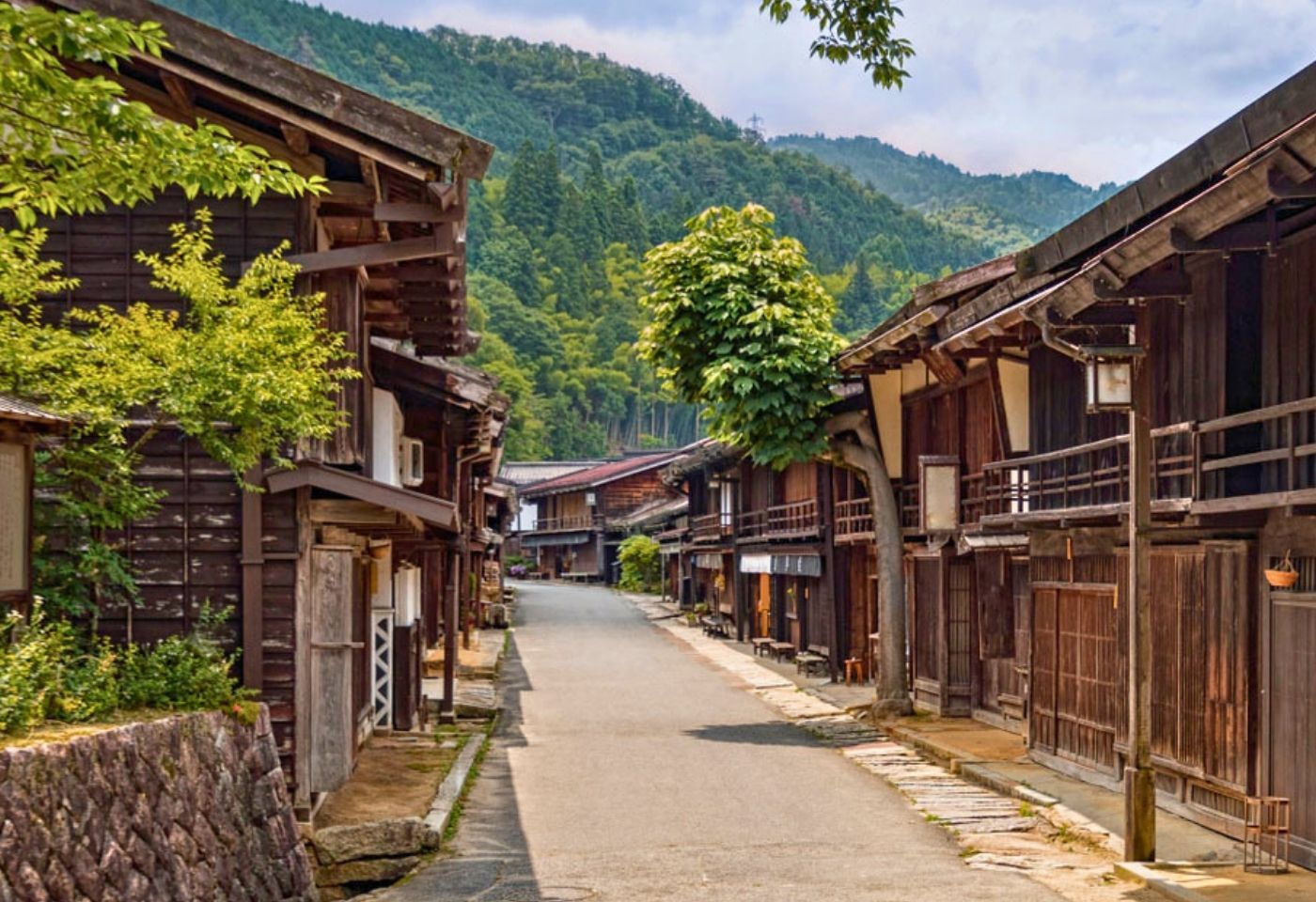
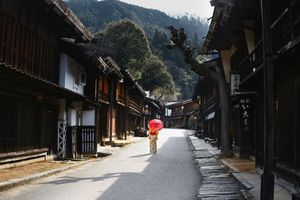
Before expressways and bullet trains, feudal lords, samurai and merchants travelled the Nakasendo Way between Kyoto and Edo, as Tokyo was once known. The 69 post towns that once fed and rested those travellers are still standing, and several look much as they did three hundred years ago.
Magome, the 43rd post town, still has a traditional ryokan where feudal lords once removed their armour for the night. Settling into tatami floors and a multi-course kaiseki dinner here is the same ritual those travellers went through, and it feels no less earned today.
Tsumago, just down the road, is worth an unhurried afternoon among its wooden houses. Beyond it, the Kiso Valley opens into rice paddies and red torii gates, with the Karasawa Waterfall worth the detour before the trail crosses Torii Pass into Narai.
Trail snapshot
- Historic Edo-period trade route between Kyoto and Tokyo
- 69 preserved post towns along the original route
- Traditional ryokan stays in post towns three centuries old
Who we recommend it for: History-minded walkers who want to move between preserved feudal-era towns rather than modern cities, and those comfortable with a moderate to challenging multi-day walk through hillier terrain.
Explore Auswalk's Nakasendo Way walking holidays.
3. Shio no Michi
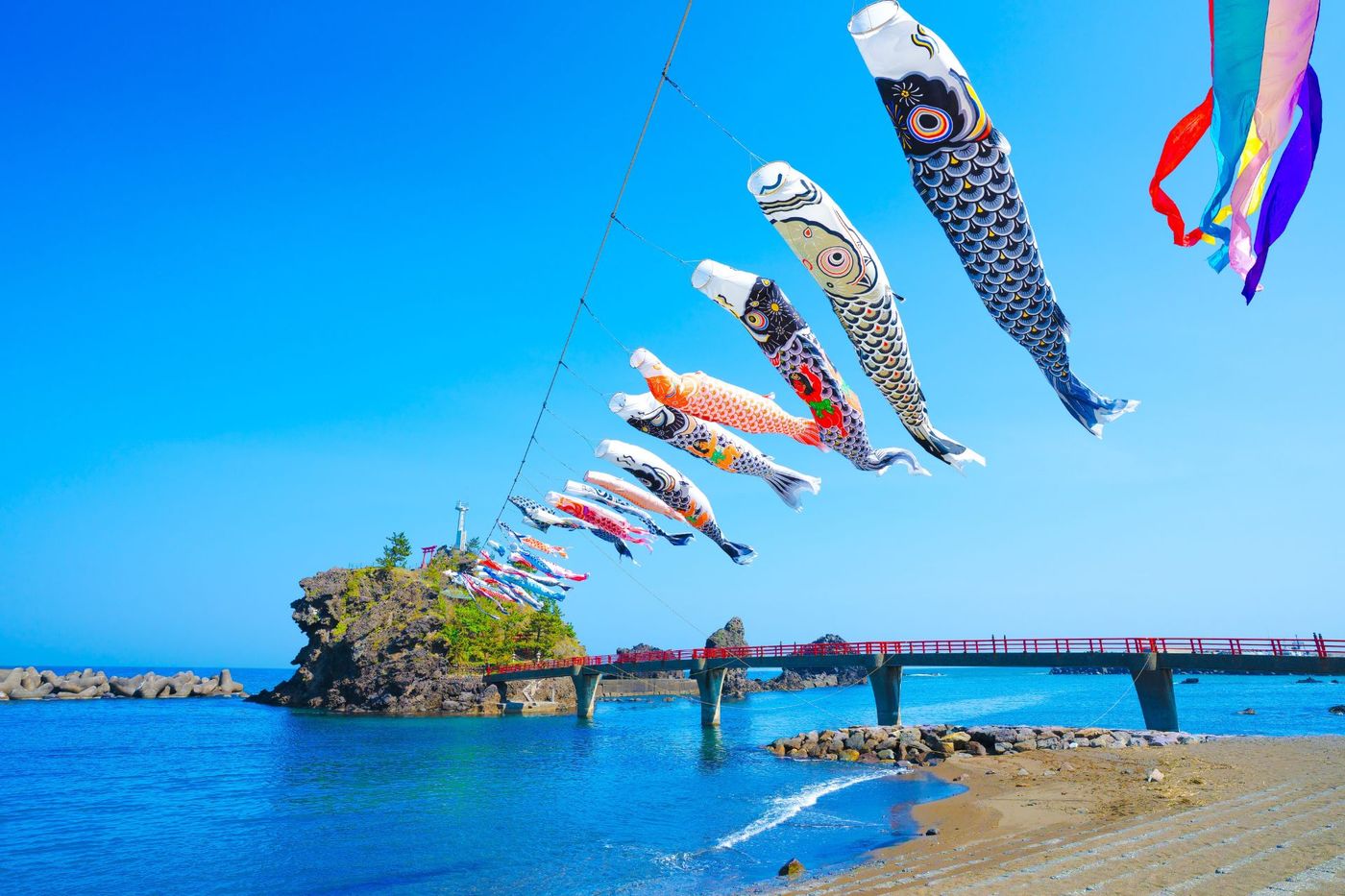
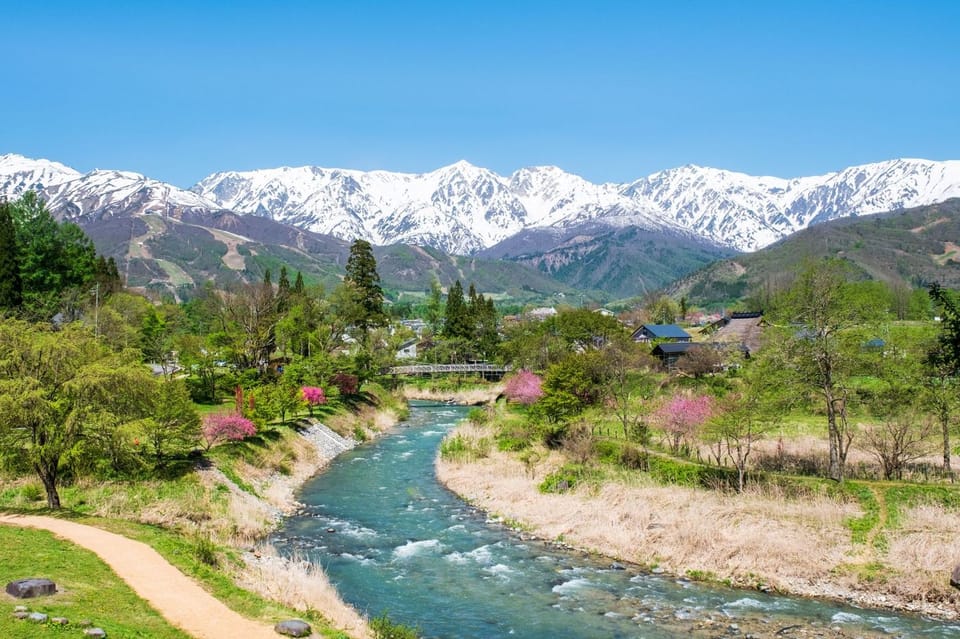
Shio no Michi, or the Salt Road, is a samurai-era trading route that once carried sea salt from Japan's coast inland through the rugged Northern Alps. The walk begins in the castle town of Matsumoto and follows the old trail through Hakuba and the Himekawa River valley to the coastal town of Itoigawa.
The route passes through quiet mountain hamlets, rice paddies and dense forest, with one high mountain pass tracing the oldest known alignment of the road, dating back to the Jomon Period. The trail ends at the Edo-period border guardhouse in Itoigawa, once used to inspect incoming shipments of salt.
This is a group-guided walk only, with local guides leading the way through fish markets, a wasabi farm and a stop at the Salt Road Museum before the trip concludes.
Trail snapshot
- Historic samurai-era salt trading route through Japan's Northern Alps
- One mountain pass follows the oldest known alignment of the trail, dating to the Jomon Period
- Currently offered as a 7-day group-guided walk only
Who we recommend it for: Walkers who want a genuinely off-the-beaten-path route with real elevation and longer walking days, paired with strong cultural immersion. Because it's group-guided only, it also suits those who prefer travelling with a local guide rather than self-guided navigation.
Explore Auswalk's Shio no Michi walking holiday.
4. Kunisaki Peninsula
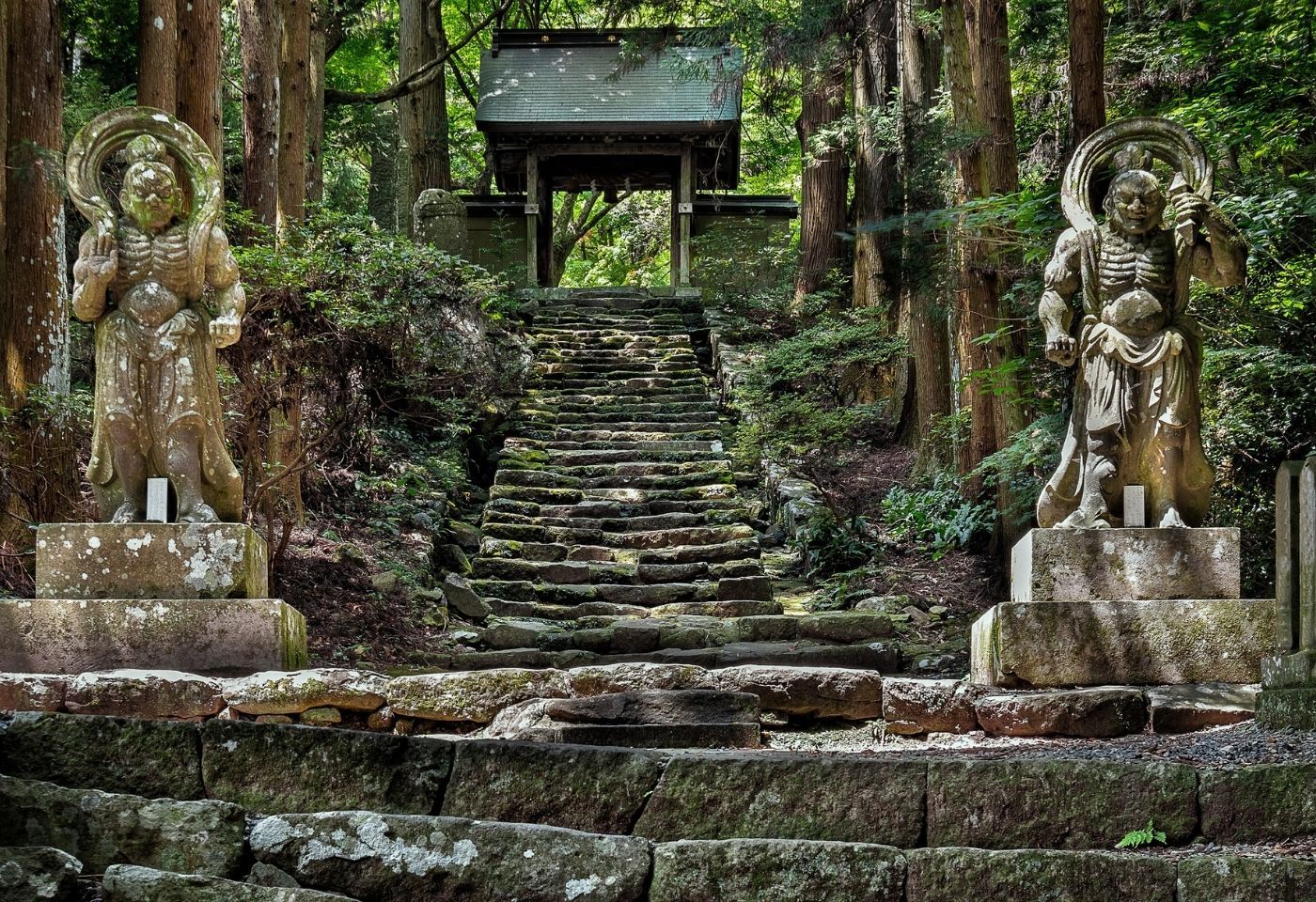
Jutting into the Seto Inland Sea from northeastern Kyushu, the Kunisaki Peninsula has been a centre of Buddhist and Shinto practice since the 8th century, when ascetic monks began walking its sacred peaks and forest paths.
The walk passes stone Buddhas carved directly into cliff faces and temples set so deep into the volcanic landscape that birdsong and footsteps are the only sounds. The route follows the Rokugo Manzan tradition, tracing back to Usa Jingu Shrine, the source shrine for a network of more than 40,000 Hachiman shrines across Japan.
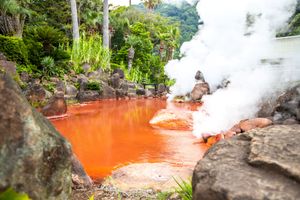
That tradition reaches its most intense point at Monjusen-ji Temple, where a local guide leads a Goma fire ritual, a ceremony in which monks chant over a sacred fire believed to burn away obstacles. The trip also visits the Kannawa district of Beppu, one of Japan's best-known onsen towns, where natural hot springs bubble up in vivid colours.
Trail snapshot
- Buddhist and Shinto pilgrimage route dating to the 8th century
- Usa Jingu Shrine is the source of over 40,000 Hachiman shrines nationwide
- Includes a guided fire ritual at Monjusen-ji Temple
Who we recommend it for: Walkers curious about a lesser-known, deeply spiritual side of Japan, and those who want cultural immersion (a fire ritual, hot spring town, guided meditation) alongside easy to moderate walking.
Explore Auswalk's Kunisaki Peninsula walking holidays.
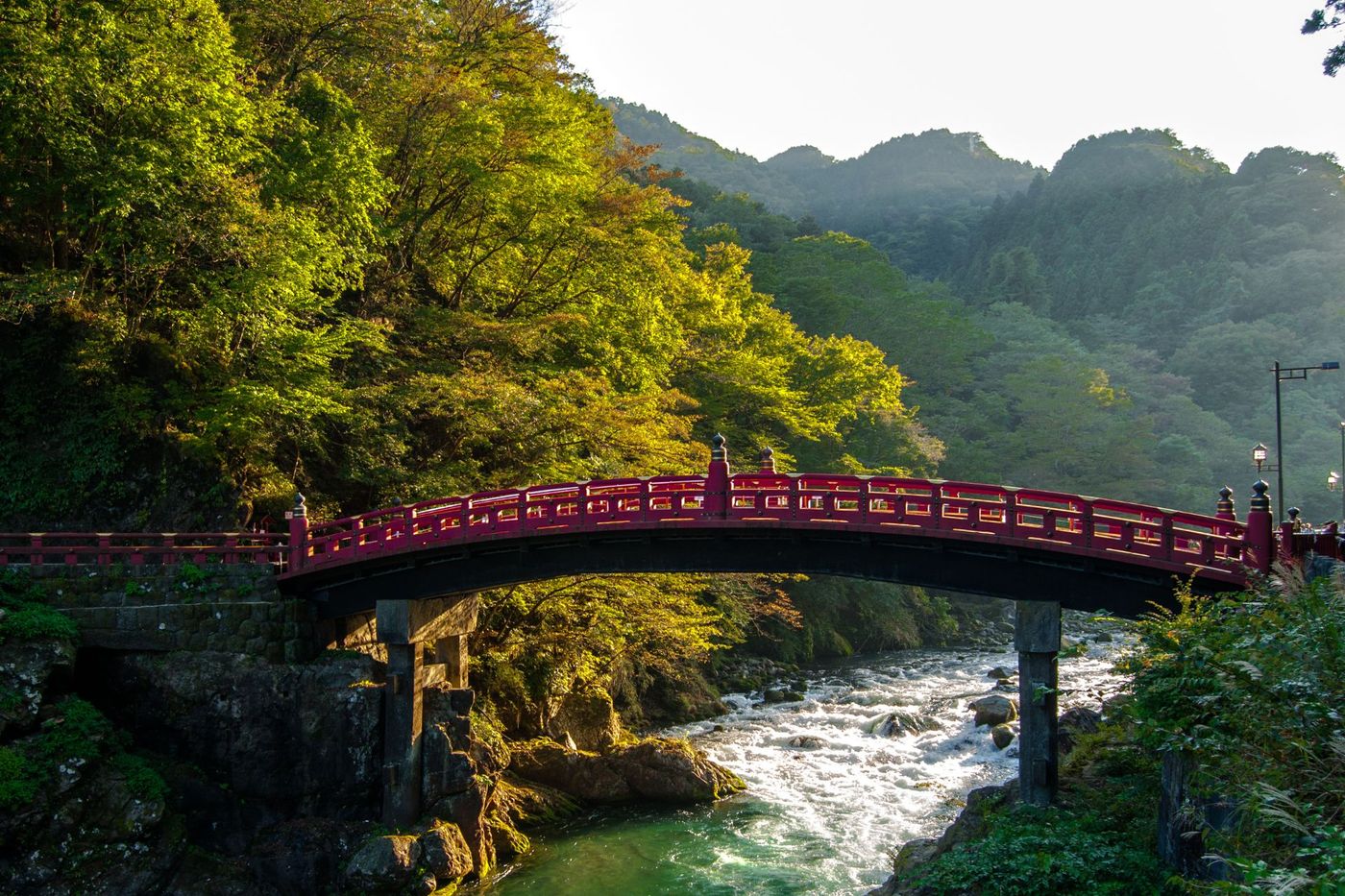
5. Nikko
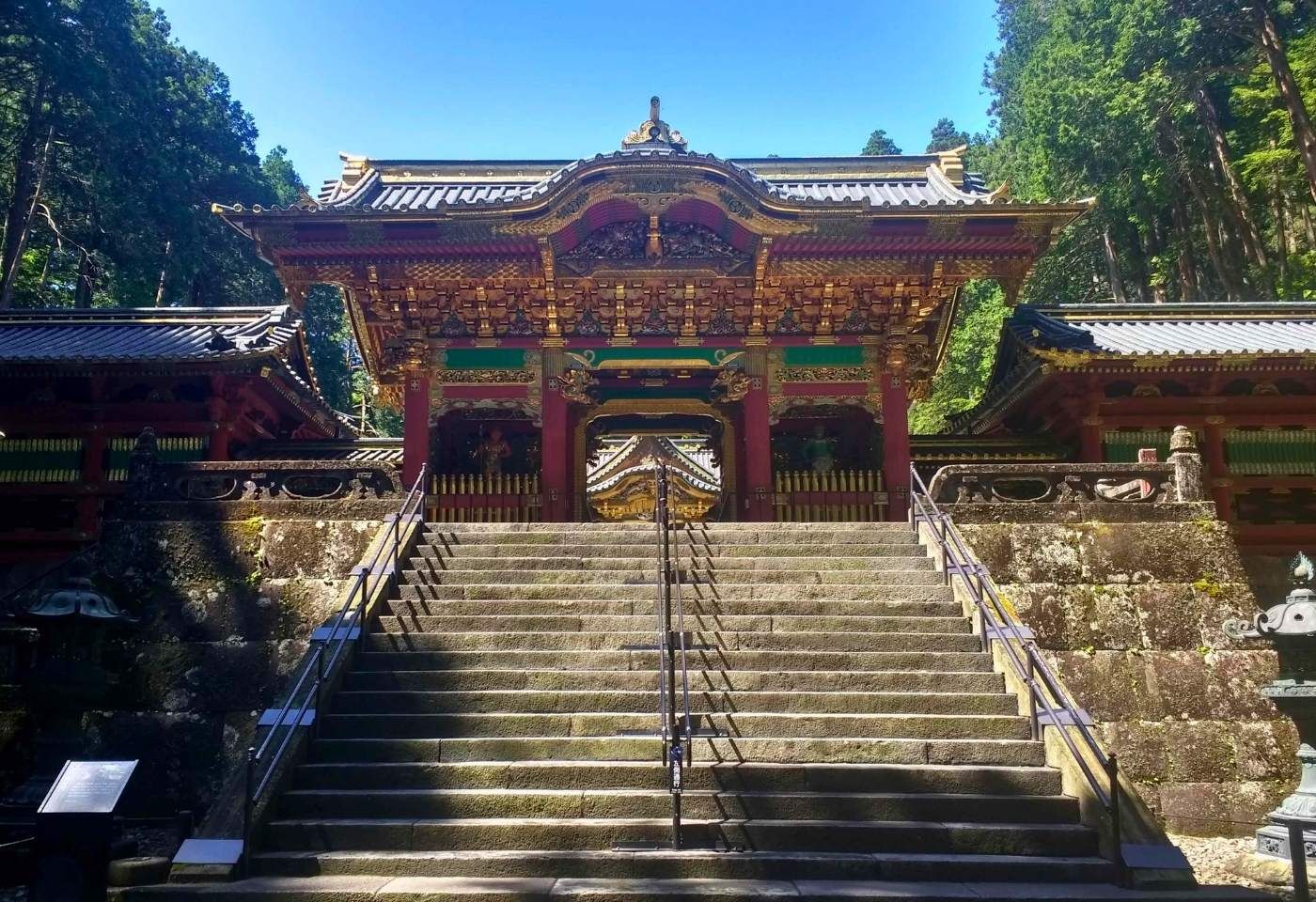
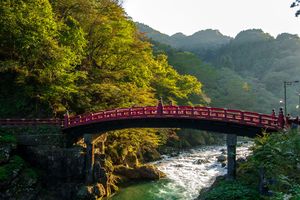
Two hours from Tokyo by train, Nikko trades the city's neon for UNESCO World Heritage temples set inside a national park, where waterfalls drop into river valleys and monkeys roam the fields.
Nikko is the resting place of Tokugawa Ieyasu, the shogun who reunified Japan after centuries of civil war. Toshogu Shrine, built in his honour, is widely regarded as the most opulent shrine in the country, its buildings covered in gilded carvings. Rinnoji Temple and the Taiyuin Mausoleum sit within the same park complex.
The walk continues to Yumoto Onsen, an authentic hot spring village in the Oku Nikko mountains, passing Ryuzu and Yudaki Falls along the Yukawa River en route. Evenings end at a traditional ryokan, with a multi-course dinner and an outdoor onsen under the mountain air.
Trail snapshot
- UNESCO World Heritage temple complex inside Nikko National Park
- Final resting place of shogun Tokugawa Ieyasu
- Finishes at Yumoto Onsen, a traditional hot spring village
Who we recommend it for: First-time visitors to Japan wanting an easy to moderate introduction to multi-day walking, close enough to Tokyo to pair with a city stay either side.
Explore Auswalk's Nikko walking holiday.
6. Hakone
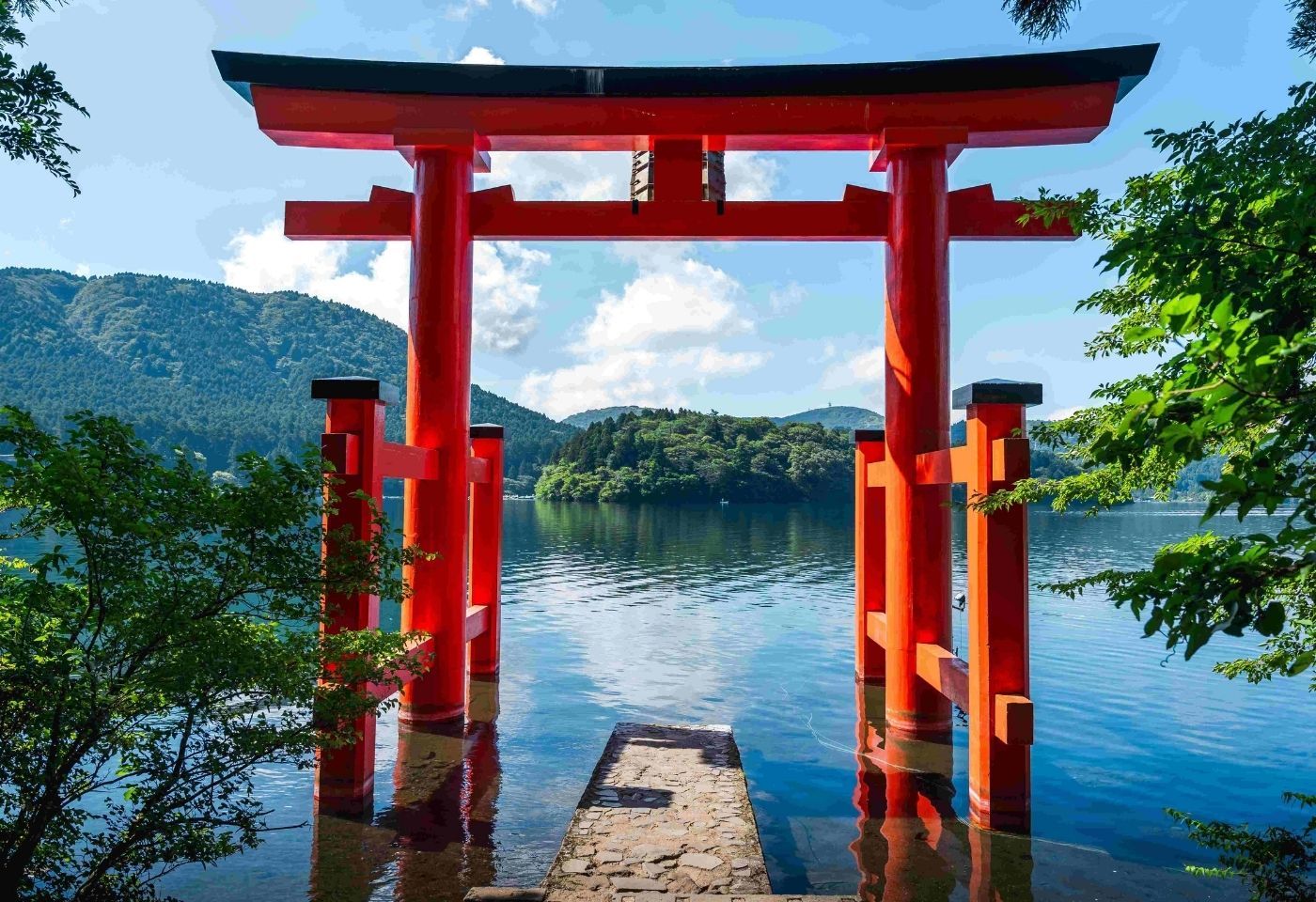
Just 90 minutes from Tokyo, Hakone swaps the city for mountain scenery, hot springs and some of the best views of Mount Fuji in the country. The walk follows sections of the Old Tokaido Road, a stone-paved highway laid down over 400 years ago and still lined with towering cedar trees planted to mark the way for samurai, merchants and pilgrims.
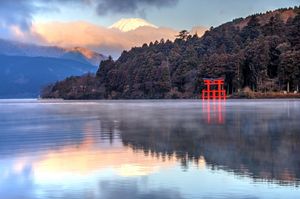
A built-in rest day gives walkers time to explore at their own pace, whether that's Hakone's art museums or the Hakone Ropeway over Owakudani, the "Great Boiling Valley," with Mount Fuji often visible on a clear day. The trip also visits Hakone Shrine, with its red torii gate standing in Lake Ashi, before a scenic ropeway and cable car journey back towards Tokyo.
Trains, a funicular cable car, a ropeway and a lake cruise are all part of the route, making this as much a scenic journey as a walking one.
Trail snapshot
- Includes a section of the 400-year-old Old Tokaido Road
- Built-in rest day to explore Hakone at your own pace
- Views of Mount Fuji from Lake Ashi and the Hakone Ropeway
Who we recommend it for: Walkers wanting a relaxed, scenic trip close to Tokyo with a rest day built in, and anyone keen to combine walking with onsen, trains, cable cars and a ropeway rather than long consecutive walking days.
Explore Auswalk's Hakone walking holiday.
7. Shikoku Pilgrimage
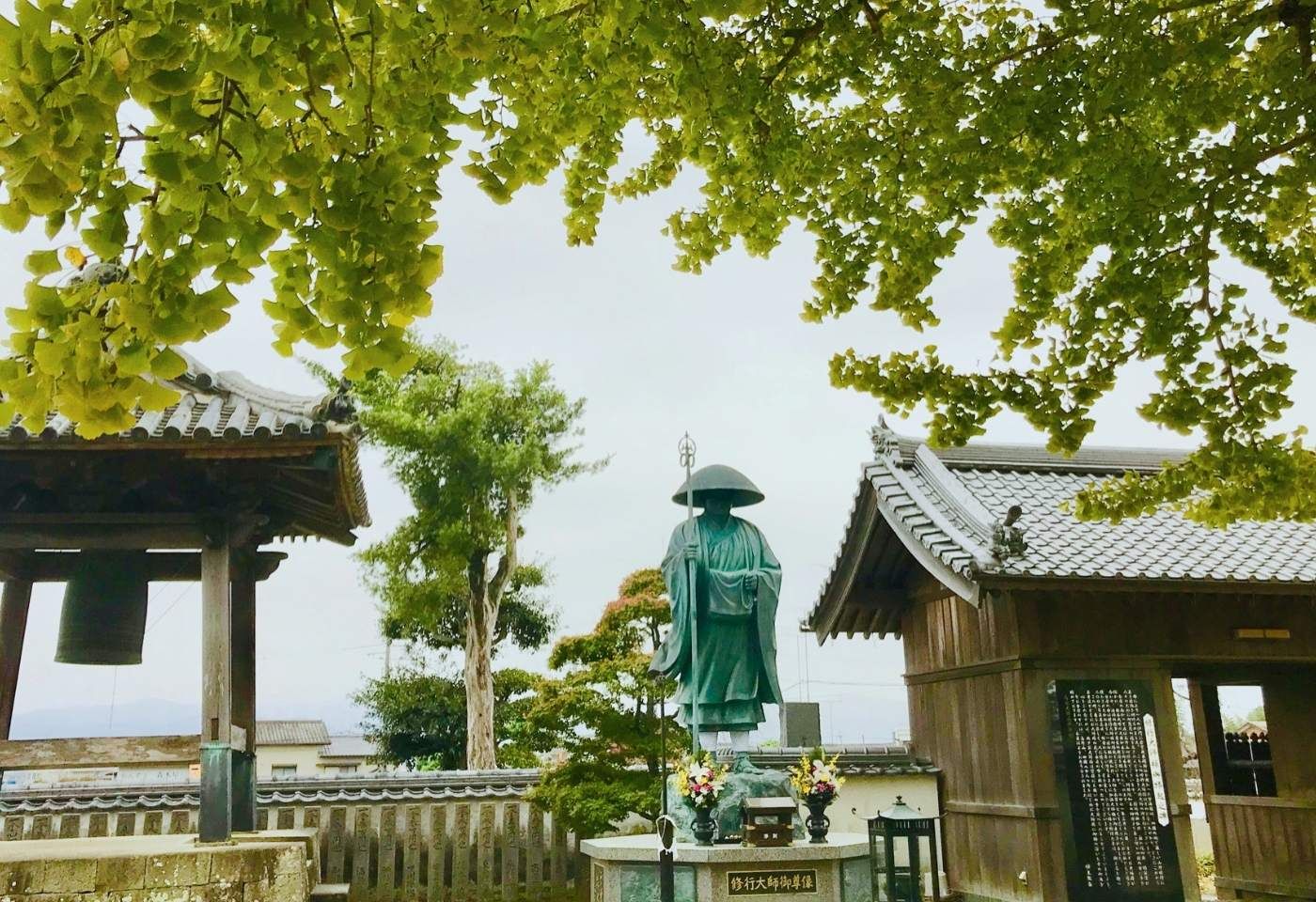
For centuries, pilgrims have walked the 88 Temple circuit on Shikoku Island seeking enlightenment, personal growth, or simply a deeper connection to something larger than the everyday. The full circuit covers 1,200 kilometres and can take up to two months, so curated itineraries pick out the most meaningful sections.
Temple 43 sits deep in the mountains, its stone steps worn smooth by centuries of pilgrims known as Ohenro-san. Matsuyama and Dogo Onsen, one of Japan's oldest hot spring bathhouses, sit along the route, and the Yueda Valley offers a quieter stretch of forest and river walking between temples.
Trail snapshot
- 88 Buddhist temples across a 1,200-kilometre circuit
- Full pilgrimage can take up to two months; curated sections run 6 to 8 days
- Includes Dogo Onsen, one of Japan's oldest hot spring bathhouses
Who we recommend it for: Walkers drawn to the idea of a pilgrimage but without the time for the full circuit, and those comfortable with a moderate to challenging multi-day walk through mountainous forest trails.
Explore Auswalk's Shikoku Pilgrimage walking holiday.
8. Michinoku Coastal Trail
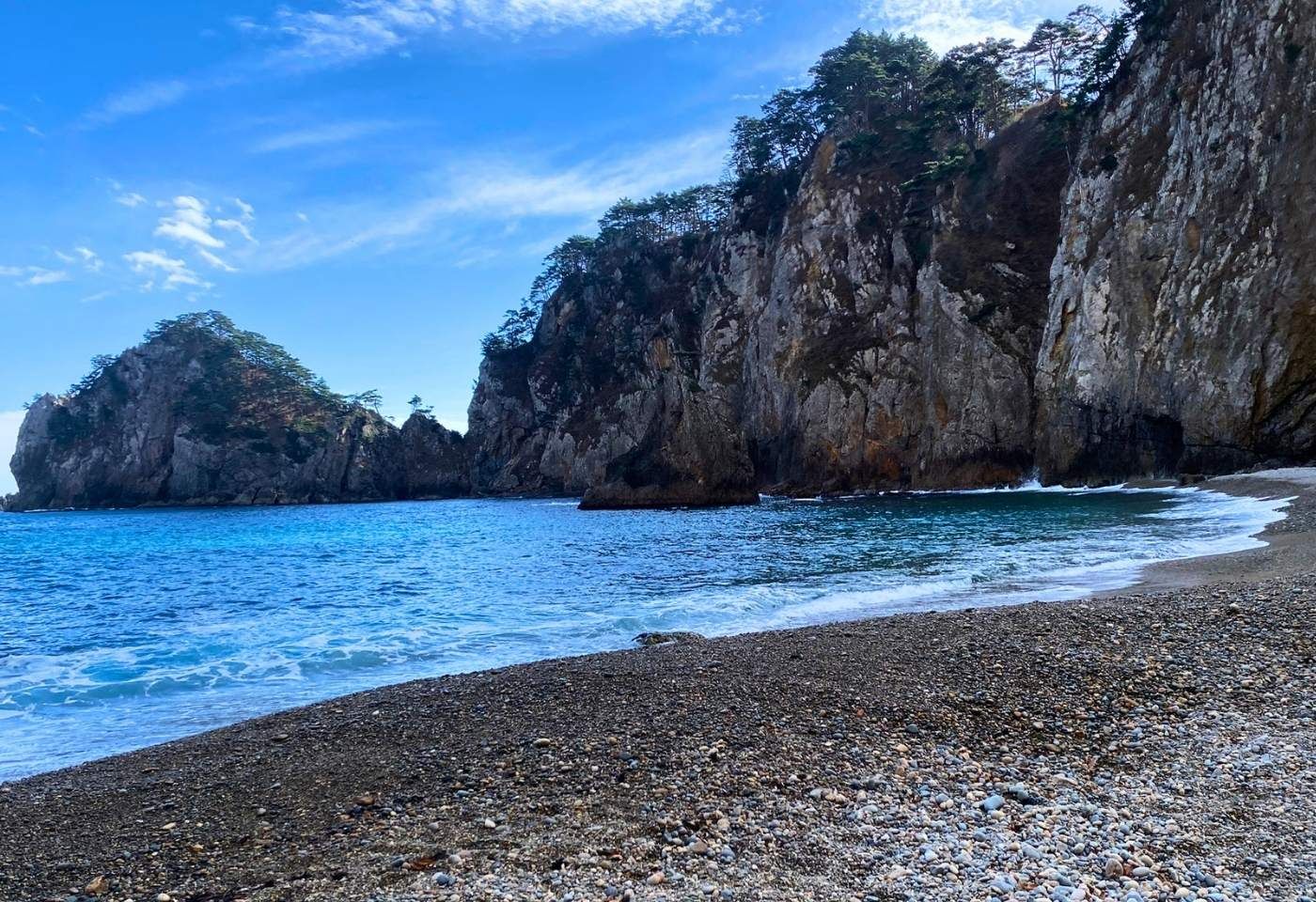
Built in the years after the 2011 earthquake and tsunami to bring life back to the Tohoku coastline, the Michinoku Coastal Trail runs over 1,000 kilometres along Japan's Pacific coast, making it one of the longest trails in the country. Curated itineraries cover the best of it in six to seven days, from Hachinohe down to Jodogahama Beach.
Clifftops here sit high above emerald waters and volcanic rock formations, with fishing villages tucked into the coves below, earning this stretch the nickname the Alps of the Sea. Kitayamazaki Cliffs rise 200 metres above the ocean with sea stacks and caves, while Samurai Rocks takes its name from an Edo-period samurai who came to survey tsunami damage and stayed for lunch.
Trail snapshot
- Over 1,000 kilometres of coastal trail, built after the 2011 tsunami
- Curated 6 to 7 day sections from Hachinohe to Jodogahama Beach
- Kitayamazaki Cliffs rise 200 metres above the Pacific
Who we recommend it for: Walkers who love coastal scenery and quiet fishing villages over temples and shrines, and those interested in Japan's recovery story along the Tohoku coast.
Explore Auswalk's Michinoku Coastal Trail walking holiday.
9. Kyoto Trail
Kyoto earns its reputation, but it also has a habit of sweeping visitors along at full speed. Five days on the Kyoto Trail is enough to step out of that current while still taking in Fushimi Inari's tunnel of torii gates, the Golden Temple, Kiyomizu-dera and the Arashiyama Bamboo Grove.
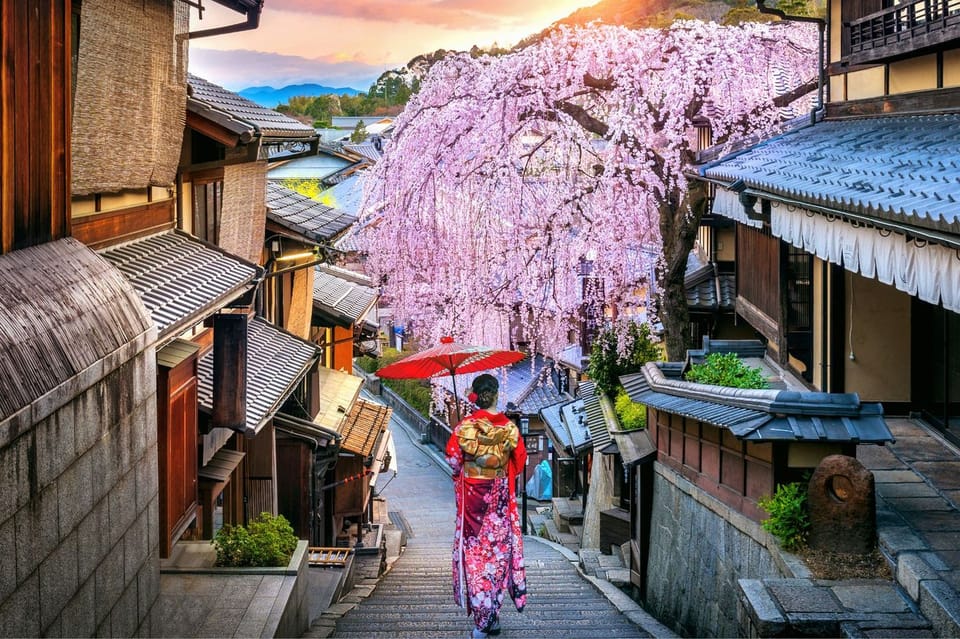
Between the well-known sights, the trail adds the Philosopher's Path under cherry trees, the cedar forests of Mount Kurama, and Kurama-dera, a temple standing for over a thousand years and widely regarded as the birthplace of Reiki. In summer, the descent from Kurama into Kifune ends with restaurants built over the river, where walkers pull off their boots and cool their feet after the climb.
Trail snapshot
- Five-day loop connecting Kyoto's major temples and quieter trails
- Includes the Philosopher's Path and Mount Kurama's cedar forests
- Well-preserved historic districts throughout
Who we recommend it for: First-time visitors to Japan with limited time who still want to see Kyoto properly, and walkers wanting an easy to moderate multi-day trip built around one city rather than moving between regions.
Explore Auswalk's Kyoto Trail walking holiday.
When to walk in Japan
Auswalk offers walks in Japan all year round, subject to extreme weather conditions such as snow in the depths of winter and heat in the height of summer. We recommend travelling during the temperate months of autumn and spring.
Autumn (September to November, 10 to 20°C) brings spectacular foliage as the forests turn red and orange, cooler and more comfortable walking temperatures, and smaller crowds on the trail.
Spring (March to May, 11 to 21°C) is cherry blossom season, with warming temperatures, fresh colour lining the ancient trails, and a lively atmosphere. It's the most popular time to walk.
Month by month, the broad pattern is: January and February bring winter conditions; blossoms begin in March and peak through April; May is warm and green; June brings the rainy season; July and August are hot and humid; September starts cooling down; October and November are peak autumn colour; and December returns to winter.
High season times: Japan has three major national holiday periods when domestic travel peaks and accommodation costs rise significantly, in some cases by 30% or more. We recommend avoiding these dates where possible: New Year (30 December to 4 January), Golden Week (29 April to 5 May), and Obon (10 to 20 August). Speak to your destination consultant when planning your dates, and we can help you find the best time to go.
Frequently asked questions
What is the best multi-day hike in Japan for beginners? Hakone, Nikko and the Kyoto Trail are the most accessible starting points, all graded easy to moderate with shorter daily distances and easy access from major cities.
When is the best time of year to hike in Japan? Spring (March to May) and autumn (September to November) offer the mildest temperatures and best seasonal colour across all nine trails. Summer is warm and humid but walkable with an early start, and Auswalk avoids scheduling walks during the extremes of winter.
Do I need hiking experience to walk Japan's pilgrimage trails? No prior hiking experience is required for the easy to moderate trails. The moderate to challenging routes, such as the Kumano Kodo, Nakasendo Way and Shikoku Pilgrimage, suit walkers with some existing fitness and walking experience.
Are these walks self-guided or guided? Auswalk offers both. Self-guided walks include maps, track notes and pack-free luggage transfers between accommodation, while group-guided walks add a local guide for the full trip. Shio no Michi is currently offered as a group-guided walk only.
Ready to trade the bullet train for a pair of walking boots? See the full range of Auswalk's Japan walking holidays.