


-300x200.jpg)
-300x200.jpg)
-300x200.jpg)
-300x200.jpg)

-300x200.jpg)


-300x200.jpg)
-300x200.jpg)
-300x200.jpg)



-300x200.jpg)
-300x200.jpg)



-300x200.jpg)
-300x200.jpg)
-300x200.jpg)
-300x200.jpg)


-300x200.jpg)
-300x200.jpg)
Robert G
January 2026
This was an outstanding experience for us which was facilitated by the easy to use guide and notes provided by Auswalk. The accommodation choices made by Auswalk were excellent and we looked forward to relaxing after each walk.
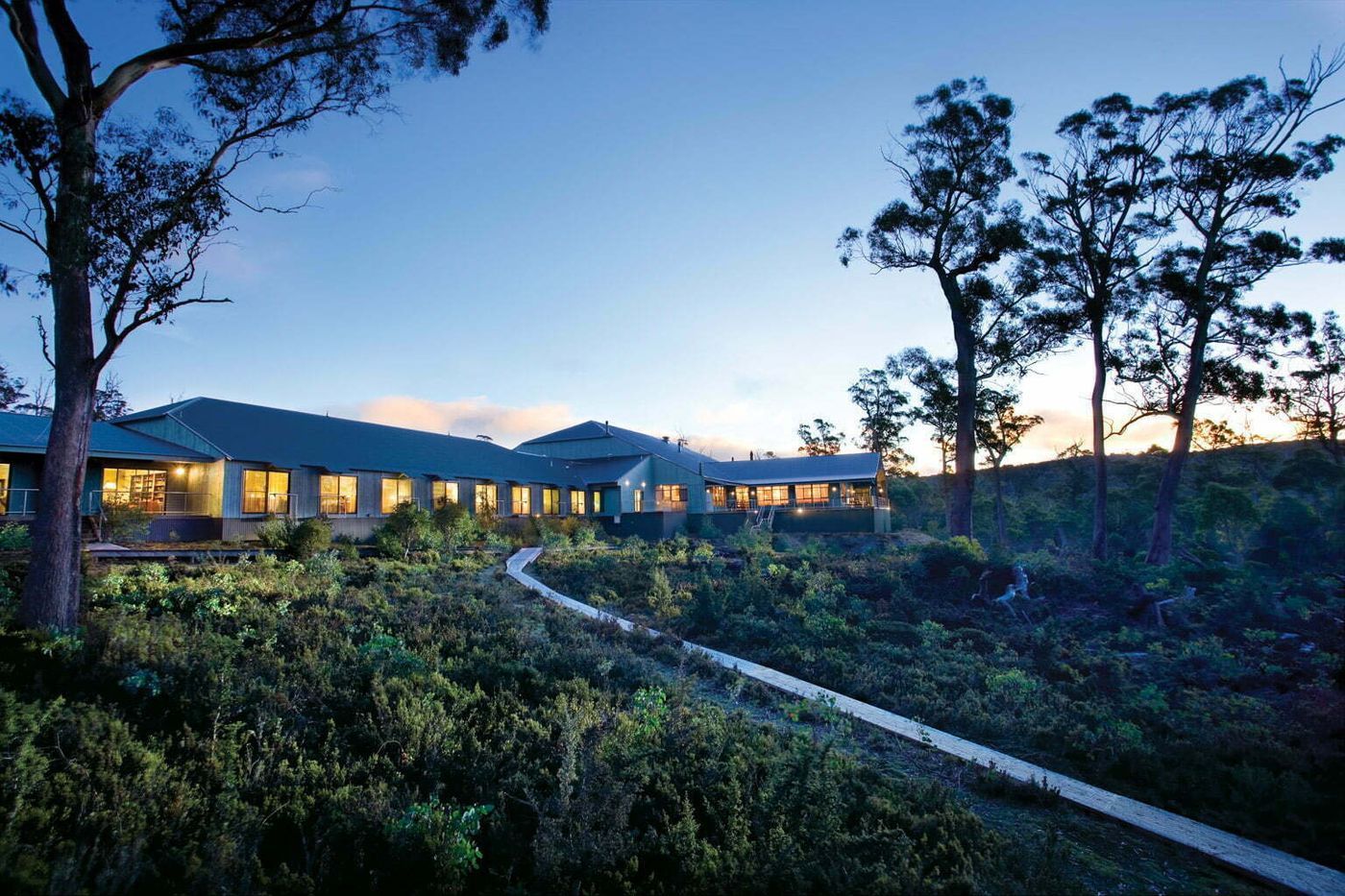
Few national parks in Australia pack as much natural drama into one place as Cradle Mountain-Lake St Clair. Ancient cool temperate rainforest, moss gardens, glacial lakes, cascading streams and wildlife encounters make this a genuine wilderness wonderland. Our walks base you in comfortable lodge accommodation, combining sections of the Overland Track with the park's extraordinary network of day walks, letting you experience the full magic of this place with a hot shower and chef-prepared meals waiting at the end of each day.
A closer look at Cradle Mountain
-1920x1280.jpg)
-1920x1280.jpg)
-1920x1280.jpg)
This was an outstanding experience for us which was facilitated by the easy to use guide and notes provided by Auswalk. The accommodation choices made by Auswalk were excellent and we looked forward to relaxing after each walk.
The tour was fantastic and completely met our expectations. Auswalk was excellent with all their communications - prompt, clear and helpful.
We thoroughly enjoyed our self-guided Auswalk trip to Cradle Mountain and Lake St Clair - such an amazing part of the world to visit. The Overland Track Transport team were fantastic and the accommodation was excellent. The walk guides made it super easy to follow the recommended walks. We were very happy with how our walking holiday turned out. Thanks Auswalk.
From start to finish this was a fabulous trip. Our wonderful guides, Bec and Georgie looked after us like family, nothing was a bother. The accommodation, food and walks were top notch. In particular, I enjoyed the walk along the southern section of coast from Pieman Heads. The rock formations are spectacular and the walk surface excellent. I was impressed that there were two walk options most days to cater for walkers of varying ability. A huge thank you to Georgie and Bec for making the trip. You both worked hard to keep things running smoothly and if it didn't your good humour kicked in. I can't thank you enough.
The Auswalk tour exceeded our expectations only because not only were the guided walks excellent but we had such a great group of people, including the sensational team of Bec and Georgie, our guides. They were so much fun, a vital part of why the tour was so successful.
The beauty of the forest and rivers in the Savage and Pieman Rivers was astounding. It was so good to get to Corinna, be out of range and enjoy the great food at the lodge, the animals and the glorious forest - both from the walking tracks, the beach and from the boat early in the morning . The love that our guides had for the land and also the flora and fauna was impressive and infectious. Kathleen and David were great story tellers and knew everything about the environment and history of the places we visited. They made the trip a real pleasure. When walking g got harder at Cradle Mountain they could be trusted for sound advice and wise guidance. Thank you for an unforgettable experience
Truganini (c. 1812 -1876) is probably the best-known Tasmanian Aboriginal woman of the colonial era. She was born into the Nuenonne group on Bruny Island in about 1812, just nine years after British settlement was established further in Tasmania, close to what is now Hobart. By the time she had learned to collect food and make shell necklaces, the colonial presence became not only intrusive but dangerous. She experienced and witnessed violence, rape and many of the brutalities inflicted on her people. By the time she was 17, she had lost her mother, sister, uncle and would-be partner to violent incidents involving sailors, sealers, soldiers and wood cutters. In 1829, when the Black War was underway, Truganini was detained at the Missionary Bay Station on Bruny Island. Placed in the custody of Augustus Robinson, a government-backed conciliator who set out to capture all independently living Tasmanian Aborigines, she remained under the supervision of colonial officers for the rest of her life. Except for a short interlude, accompanying Robinson in his travels to Port Phillip (now part of Melbourne), she spent 20 years imprisoned, with other Aboriginal Tasmanians, on Flinders Island, and another 17 years in the Oyster Cove Camp, south of Hobart. Details of her biography are sketchy, predominantly drawn from the journals and papers of Robinson, with whom she was associated for ten turbulent years until her long detention on Flinders Island. She was bright, intelligent and energetic, known as one of the few Aboriginal Tasmanians rooted in pre-contact language and culture, who survived beyond the middle of the 19th century. She was frequently depicted in paintings and photographs.
Cradle Mountain was first mentioned in 1826 by Joseph Fossey, an official surveyor for the Van Diemen’s Land Company, who named it for the likeness of its profile to a baby’s cradle. Some stories suggest that it was not a baby’s cradle but a miner’s cradle (a rocker box to separate alluvial placer gold from sand and gravel). You can be the judge!
For half a century, Waldheim Chalet, opened by Gustav and Kate Weindorfer in 1912, was the gateway to Cradle Mountain. A love of botany and wild scenery drew this couple to the region. The charismatic Gustav’s declaration that Cradle Mountain must be ‘a national park for the people for all time’ was vindicated by the creation of two adjoining scenic reserves in 1922, and ultimately by the much larger Cradle Mountain – Lake St Clair National Park that followed. Explore the restored Waldheim Chalet. Interesting information on the European history of the area, including a nice audio drama piece featuring Gustav and Kate (press the button to listen). Imagine what it would have been like to live here, or even to just come and stay here as a tourist in the early 1920’s!
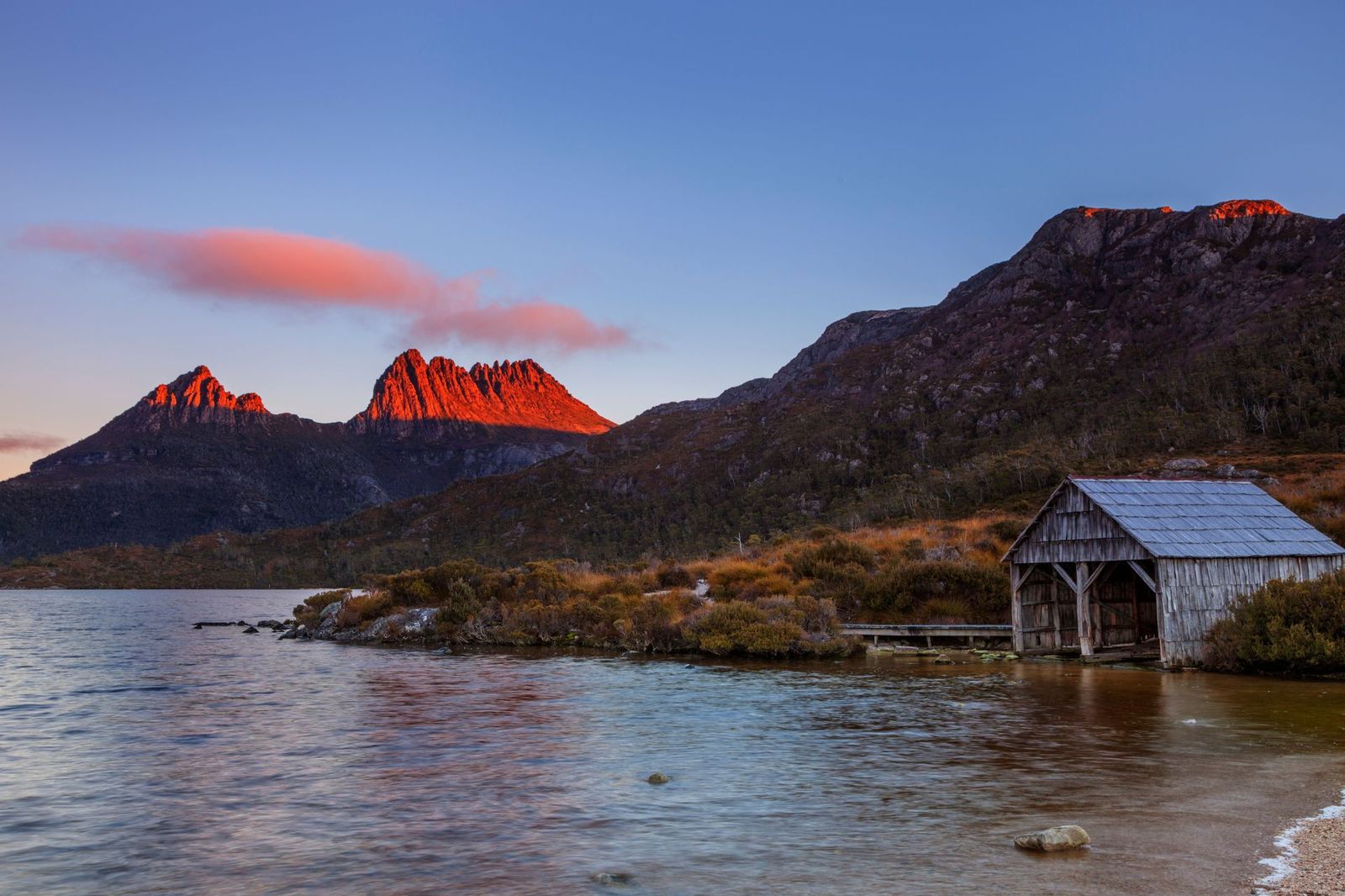
The boatshed or boathouse on Dove Lake was built by Lionel Connell around 1940 using King Billy pine. He was the first ranger stationed at Cradle Mountain National Park. The Connell Family took over tourism in the area in the 1930’s after the Weindorfers, who were the first European caretakers of this area, passed away. The Dove Lake boatshed remains substantially unaltered from its original form, although some restoration work was completed in 1983.
Although the boatshed is now vacant, boating was popular on the lake up until the 1960s. Indeed, during the 1920s Gustav Weindorfer used a very basic and somewhat perilous raft comprised of two pine logs joined together with several narrow cross boards (‘a paling deck’) on the lake. He later used a more substantial punt to ferry passengers around. In 1938, the Cradle Mountain Reserve Board purchased three Huon Pine boats for this purpose, and they remained in service for tourists until the 1960s. It was for these boats that the Lake Dove boatshed and the similar but smaller boatshed at Crater Lake were built.
At the other end of the park, Albert Dundas Fergusson (‘Fergy’) kept a tourist camp at Cynthia Bay before WW II and became the first ranger for the south side of Cradle Mtn - LSC National Park. He operated the first LSC ferry and built the Pine Valley Hut (off the Overland Track, near The Acropolis). For the enjoyment of walkers using the hut, he carried a metal bathtub there from the Narcissus Bay ferry landing (approx. 10 km), balancing it upside-down on his shoulders and head!
FAUNA
You may see wombats (Vombatus ursinus) on the open Buttongrass Moorlands around or near Dove Lake. While mainly nocturnal, these cute marsupials often come out in the late afternoon around Cradle Mountain to graze. Please do not pet them or feed them (and discourage others from doing the same). The large burrows you see around the park are the homes of these wombats, in which they pass the warmer daytime hours in quiet slumber. You will see their characteristic cube-shaped poos on the edge of many boardwalks in the park. These little poo piles are territorial signposts! Wombats are common in this part of Tasmania. They are also found in similar ecosystems on the mainland (e.g., Snowy Mountains of NSW and VIC High Country).
You are likely to hear quite a few birds as you walk. One of the most noticeable will be the Black Currawong, a Tasmanian endemic (i.e., found only in Tasmania), a relative of the Pied Currawong on the mainland. These large black birds with their strong beaks and piercing yellow eyes are found in a range of habitats and make loud, noisy, trumpet-like calls, often in flight. One guidebook describes these calls as “a rollicking, wailing, yet rather musical ‘kiarr-weeik, weeik ? yarr’, also short metallic croaks”. These birds are common in the LSC and Cradle Mountain area. Some will be quite bold and want to share your lunch! Please don’t feed the wildlife.
Tasmanian Pademelons (Thylogale billardierii) are medium-sized wallabies that are common around the Lake St Clair Lodge. They prefer the dense vegetation of rainforests, tea-tree scrub and heathland, but are also found in drier woodlands with damp gullies or patches of dense vegetation. They are found only in Tasmania. These little pademelons should not be confused with substantially larger Bennett’s Wallaby (Macropus rufogriseus). They are known as Red-Necked Wallabies on the mainland, where they also occur. They are widespread across much of Tasmania.
Tasmanian Devils are challenging to spot in the wild here, as they are in small numbers, but also because they are largely nocturnal. But if you have time, the Tasmanian Devil Centre or conservation sanctuary is well worth a visit. The Devil is the largest carnivorous marsupial, weighing in at 10kg. The Tasmanian Tiger, the Thylacine, was the largest, but it was hunted to extinction. It is a solitary creature and is capable of crushing bones as it has powerful jaws. They will eat just about anything, including insects, possums, even small wallabies and wombats.
FLORA
Depending on which month you are walking, different plants will be in flower in these moorland areas. In December, you will find Scoparia (Richea scoparia), Rigid Candleheath (Richea spregelioides) and Pandani (Richea pandanifolia) in flower. The latter like to have their feet wet and often grow on river banks. The beautiful colours of flowering scoparia include reds, pinks, yellows and whites. There is a lot of information on these plants and more in the LSC Visitor Centre if you intend on visiting here.
Spring wildflowers in early December may include: Bright red Tasmanian Waratahs (Telopea truncata), delicate pink or white Wiry Bauera or Dog Roses (Bauera rubiodes), and the creamy ‘paintbrush’ flowers of the Rigid Candleheath (Richea sprengelioides). If you are here later in the summer, other species will be in flower. There is always something beautiful to see.
If you are here in early December, you will find pink mountain berry bushes and beautiful waratahs in flower. The forest is dominated by Myrtle Beech (known as Antarctic Beech on the mainland). The new season’s growth is first red-orange, then turns light green, and finally becomes the same dark green as the adult leaves. There are also dead logs on the sides of the track covered with mosses and lichens.
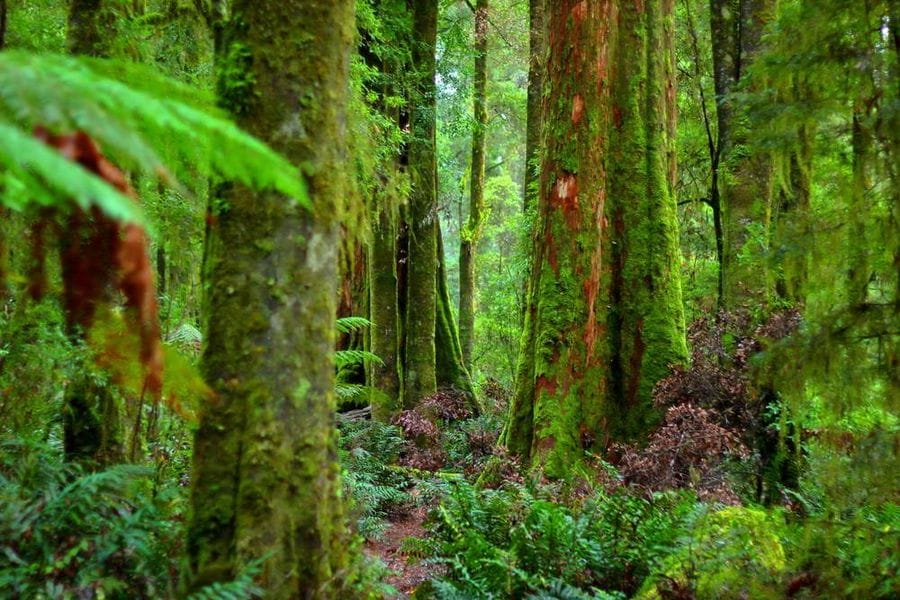
Ancient Myrtle Beech trees festooned in moss tower majestically from a moss-strewn forest floor. The effect is stunning and reminiscent of an ancient cathedral or grand ballroom, hence the name.
Did you notice the small ‘bonsai’ beech trees growing in rocky areas around Dove Lake? These are endemic Deciduous Beech Trees (Nothofagus gunnii). They are the only native Australian tree with leaves that change colour and fall completely each Autumn. They are commonly referred to simply as “Fagus”. Many people travel, especially to Cradle Mountain, at the end of April each year to enjoy the sight of the Fagus autumn colours. These stunted trees are only ever 1.5 – 5m tall, depending on the severity of the conditions where they grow.
Buttongrass Moorland (sometimes called Buttongrass Plains). This vegetation community is dominated by grass-like sedges and healthy shrubs, and is found in marshy, nutrient-poor areas. The most typical species here are clumps of what is commonly known as ‘buttongrass’ (Gymnoschoenus sphaerocephalus), a type of sedge. It’s the flowering seed head “buttons” of this sedge that give rise to its common name. These moorlands are one of the most fire-adapted ecosystems to have evolved in Australia. You may hear something that sounds like lambs bleating in the buttongrass. This is the call of the Tasmanian Froglet (Crinia tasmaniensis) – a small frog only 30 mm long that is found only in Tasmania. Wombats are often seen feeding in this area in the early morning and late afternoon – evening.
Cushion Plants: These bright-green mounds are made up of many individual plants from several different species, all living together in a tightly-packed community to help them cope with icy winds and prolonged snow. The insulating effects of the mound raise the temperature within, helping prevent the plants’ water supply from freezing. The rounded cushion shape also provides a defence against cold winds. You can gently touch the mounds to get a feel for how solid they are. In the NZ alpine zone, such plants are referred to as “vegetable sheep”. Though these plants seem tough, a single step from a hiker’s boot can fracture the mound, leaving the plants vulnerable to wind and cold. It can take up to 30 years for a Cushion Plant to recover from a boot print. Watch your step!
Reindeer Moss Lichen: This is a pale-coloured lichen (a symbiotic relationship between a fungus and an alga) that grows in extensive patches on the forest floor and looks a bit like miniature trees. In fact, it is often used by model train enthusiasts as “trees” in the mini-train landscapes that they build! This lichen is found worldwide, mainly in alpine tundra areas. It is very cold-tolerant, and as the name suggests, is eaten by reindeer (caribou) in the northern boreal forests. It is slow-growing (3 – 11 mm per year) and takes a very long time to regenerate if trampled.
King Billy Pine (Arthrotaxis selaginoides) Endemic to Tasmania, these trees can grow to 40 m tall (as per this splendid specimen in front of you) but are often stunted and twisted in high, exposed places. They are found in valleys and rainforest areas in the western and central mountains, often in association with Myrtle Beeches. A valuable commercial timber with straight-grained, durable wood that is pink in colour and easily worked. Prized for window frames and boatbuilding. Note that while the info sign suggests that Tasmania is the only place in the Southern Hemisphere where trees belonging to this family (the Cupressaceae – Cedars) occur, New Zealand also has two endemic cedar species. Tasmania’s endemic Pencil Pines (A. cupressoides), which you see along the Rainforest Circuit, and in several other spots in the Cradle Mountain area, are closely related to the King Billy Pine.
Casalingo
Explore a well-kept secret local Italian restaurant that doesn’t scream ‘tourist.’ Hidden down a side street, Casalingo is a quiet yet sleek restaurant that produces the best hand-rolled gourmet pasta and pizzas in town!
Sandy Feet Café
Do you want something extra healthy and delicious to kick off your walking holiday? Sandy Feet Café has a side selection of vegetarian and gluten-free options for breakfast, lunch, and dinner. You can also grab something tasty for the road at their health food store.
Great Ocean Road Brewhouse
Live music, local wine, and the #1 craft beer on the Great Ocean Road are what give this brewhouse its fame. Great Ocean Road Brewhouse boasts over 100 of the best craft beers available! Add on the family-friendly bistro that has hearty and delicious meals, and you will be stuffed to the brim.
La Bimba
La Bimba offers the option of fine dining while being environmentally friendly. Partnering with local farmers, fishermen, and vineyards allows this classy restaurant to provide you with the freshest products to create a sumptuous meal.
Transport from Launceston/ Hobart:
It is possible to drive around Tasmania with a hire car. Public transport is limited to Cradle Mountain. There are, however, private operators that pick up in Launceston and drop off at Cradle Mountain. There are no direct flights to Cradle Mountain. One must fly to Hobart (good for the Lake St Clair end of the park) or Launceston to get to Cradle Mountain
Our summer is the best time of year for hiking in Tasmania. However, it is suitable to hike in Cradle Mountain in Tasmania from October to May. See the Bureau of Meteorology for more information about the average temperatures and rainfall at different times of the year.
The tracks vary quite considerably throughout the park. However, the walks that we offer are all on very well-groomed tracks. There are portions of sections that require a little scrambling, but they can be avoided by staying on the plateau. The tracks, in the most part, are made of packed earth and are easy to negotiate.
The walks vary in difficulty in Cradle Mountain Lake St Clair National Park, so one can have limited fitness and do all the easy walks. However, the walks that are of real value require that you have at least a moderate fitness level.
As with any journey, it is essential to be prepared for your walking holiday. While we will be transporting your luggage from accommodation to accommodation, you will still be carrying a lightweight day pack with you. Here is what we suggest that you carry with you each day:
Now that we have the essentials packed, it is time to think of those additional items that may be worth packing along with you. These may include and are not limited to:
Cradle Mountain-Lake St Clair National Park is carved up into two distinct sections: there’s the Cradle Mountain section and the Lake St Clair Derwent Bridge section. Cradle Mountain was first mentioned in 1826 by Joseph Fossey, an official surveyor for the Van Diemen’s Land Company, who named it for the likeness of its profile to a baby’s cradle. Some stories suggest that it was not a baby’s cradle but a miner’s cradle (a rocker box to separate alluvial placer gold from sand and gravel).
DOVE LAKE CIRCUIT, CRADLE MOUNTAIN
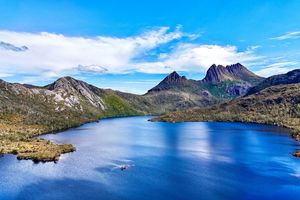
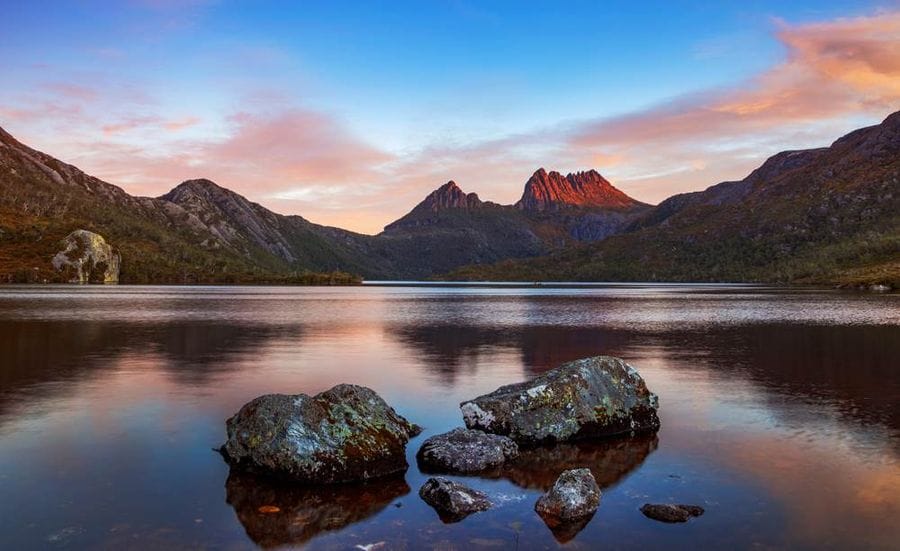
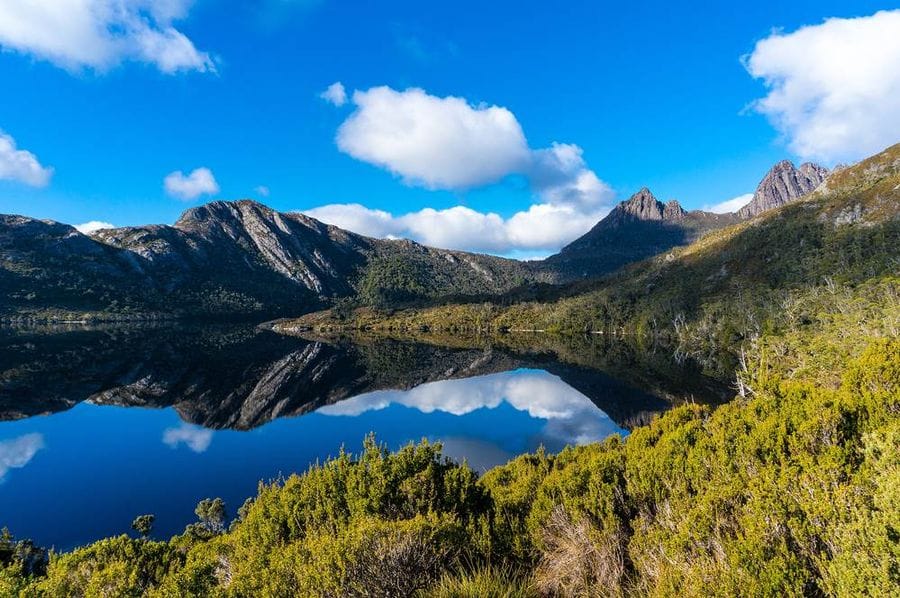
The Dove Lake Circuit is only 5.7 km and takes about 1hr 45mins to 2hrs 30mins to walk. The grading of this walk is easy, as for most of the walk, the track is flat. This is where you will get that iconic photo of Cradle Mountain reflected in the water. The trail starts at the car park and is easy to follow, as it's on a boardwalk much of the way.
The track takes you past Glacier Rock and underneath the craggy spires of the Mountain. Glacier Rock is a modern-day record of times gone by when Glaciers were moulding these mountains and valleys. The striations that mark Glacier Rock run parallel to the lake and were shaped by the enormous pressure from the weight of the glacier. These were caused by rocky debris within a massive glacier that moved down from the slopes of Cradle Mountain, gouging out the basin that would later contain the waters of Lake Dove. As the glacier passed over the hard quartzite of Glacier Rock, the debris left behind these scratches! There are many other glacial features in the area, including Lake Wilks, a hanging lake or cirque, on the high plateau area under the peaks of Cradle Mountain.
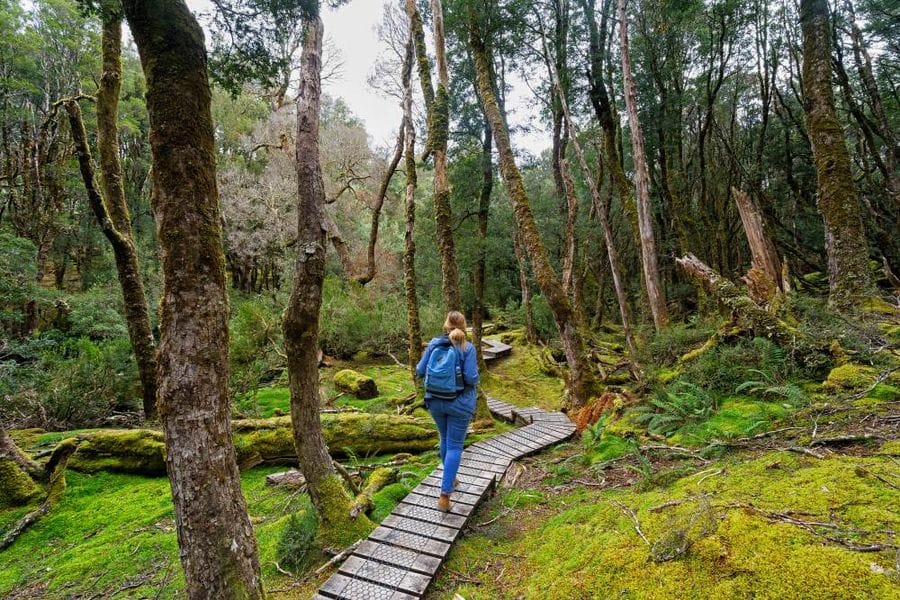
There’s also a section of magnificent cool temperate rainforest along the walk, known as the Ballroom Forest. The ancient Myrtle Beech trees festooned in moss tower majestically from a moss-strewn forest floor. The effect is stunning and reminiscent of an ancient cathedral or grand ballroom, hence the name.
The last thing of note is the boatshed on the northwest shore, built in 1940 by the first ranger, Lionell Connell. It was used to house the Huon Pine boats that were used to ferry tourists out on the lake. It’s not used anymore, but evidently, it makes for another fabulous photo opportunity.
CYNTHIA BAY TO SHADOW LAKE, LAKE ST CLAIR
This walk is 11 km and will take somewhere between 3 and 4 hours to complete. There is a gentle incline to this track as you make your way to the lake. The track itself is well-maintained, but it is a bit rocky, so watch your step. You can continue to walk up to Mount Rufus and do the whole Mount Rufus circuit, but only if you have another 3 to 4 hours to spare, a total walk of 21 kms.
The shores of Shadow Lake are a nice spot for morning tea. There is a good place to sit near the lake’s edge and soak up the forest and the ambience of the lake. Once you’ve rested, you can backtrack to your car or accommodation, or you can continue to walk the Shadow Lake circuit. This adds an extra 3 kms to the walk, but it rewards you with more myrtle forest and the chance to see more fauna.
THE OVERLAND TRACK TO MARION'S LOOKOUT, CRADLE MOUNTAIN
There are 2 iconic walks to do at Cradle Mountain, and this is the other one. This walk of 8.2 km starts at Ronny Creek and is graded as moderate. The walk doesn’t sound too hard, but it does have a fairly substantial incline to it, so be aware that it will take up to 4 hrs to complete. For many people, the downhill is more of an issue, but with care, this walk is not that difficult.
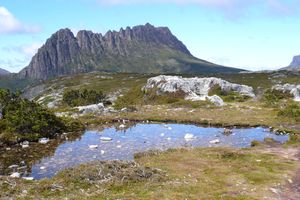
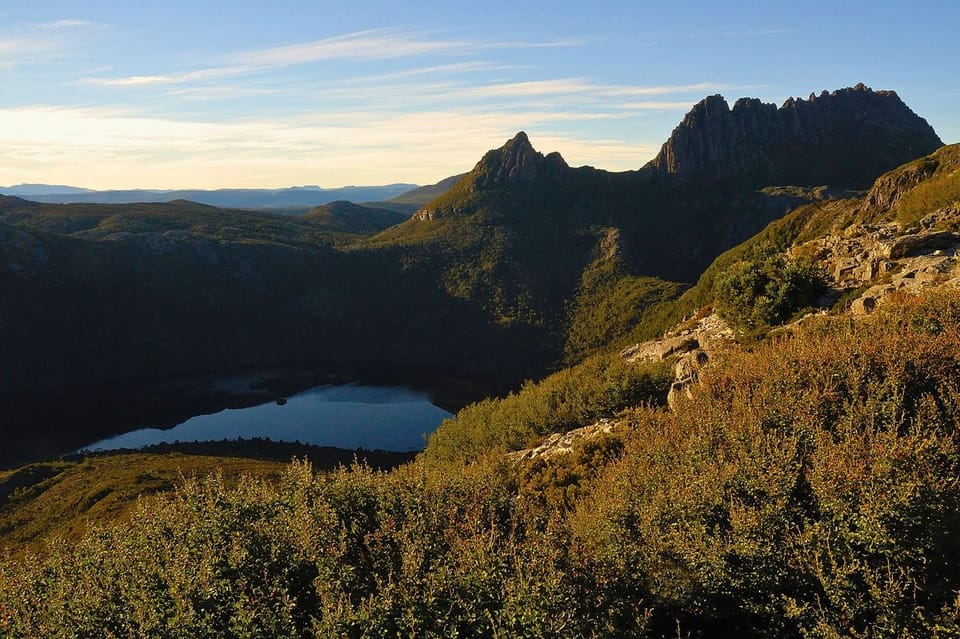
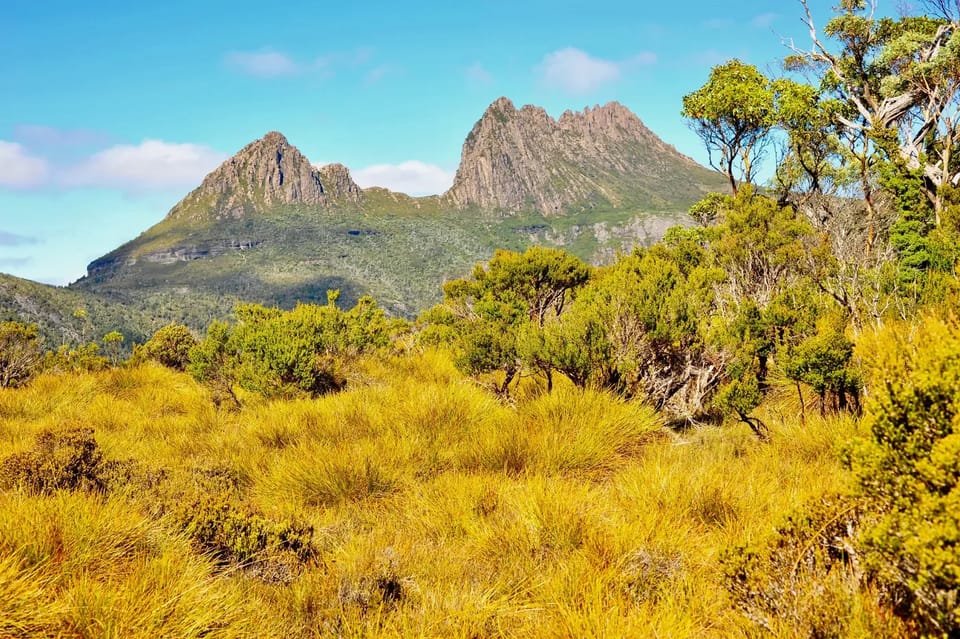
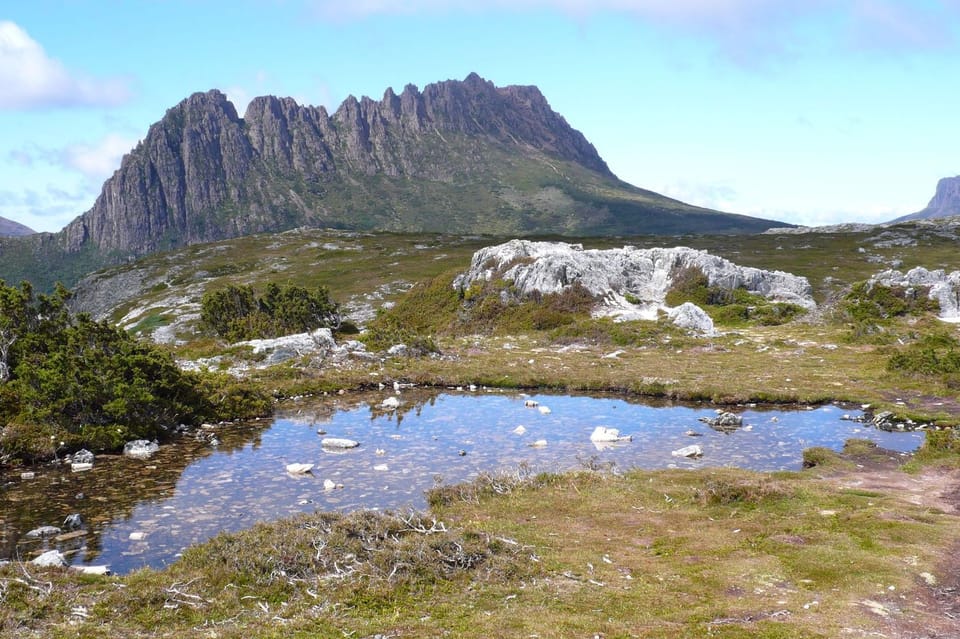
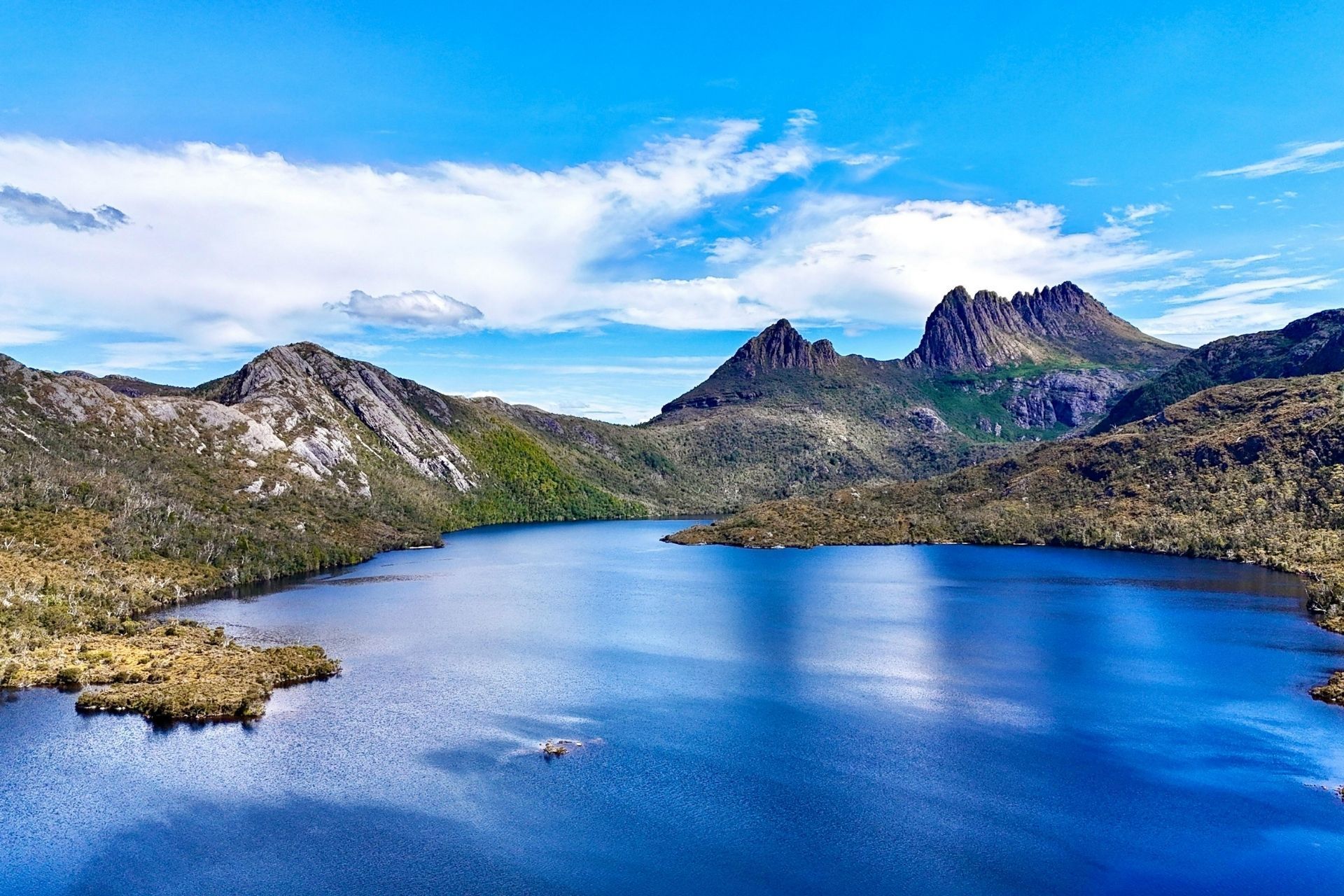
From the Lookout, you can see Dove Lake and Lake Lilla below. Ahead is the magnificent Cradle Mountain, which consists largely of columnar dolerite rock. The highest peak at the right is the main summit at 1545 m. The lower peak at the left end of the ridge is Weindorfers Tower. The smaller peak that forms the end of the “cradle” to the far left is Little Horn (1355 m). Marion’s Lookout was named by Gustav Weindorfer after his sister-in-law, who lived with her husband, Daniel Cowle, in the nearby town of Kindred.
In contrast to the rounded domes of Marion’s Lookout, Hanson’s Peak, and Mt Campbell, the profile of Cradle Mountain is very rough and rugged. In past ice ages, Cradle Mountain would have been a rocky outcrop emerging through the ice sheets. Such glacial islands are known as nunataks (a term that comes to us from the Inuit people of Greenland).
WALDHEIMS & FOREST WALK, CRADLE MOUNTAIN
The expected time to walk this is approximately 1 hour, as it is only 2.2 km long. But you might need to add some extra time to explore the Chalet. The walk starts at the Ronny Creek shuttle stop.
For half a century, Waldheim Chalet, opened by Gustav and Kate Weindorfer in 1912, was the gateway to Cradle Mountain. A love of botany and wild scenery drew this couple to the region. The charismatic Gustav’s declaration that Cradle Mountain must be ‘a national park for the people for all time’ was vindicated by the creation of two adjoining scenic reserves in 1922, and ultimately by the much larger Cradle Mountain Lake St Clair National Park that followed. There’s some interesting information on the European history of the area in the Chalet, including a nice audio drama piece featuring Gustav and Kate. Imagine what it would have been like to live here, or even to just come and stay here as a tourist in the early 1920’s!
ABORIGINAL CULTURAL WALK LAKE ST CLAIR
This walk starts at the information centre at Lake St Clair. It is an easy walk of only 2 kms, about 30 minutes. This walk is very informative as it gives a walker a picture of what it was like for the people who were here before the Europeans, the Larmairremener. The Larmairremener are the local group of people who were originally from the Big River people. A Tasmanian Aboriginal woman, Julie Gough, working with the Parks Service as the Indigenous Interpretation Officer, developed this cultural walk project with three Aboriginal women artists, Lola Greeno, Muriel Maynard and Vicki West. The project involved the women coming here to make an artwork from local materials, which is on display in the Visitor Centre. They also developed the interpretive signs along the cultural walk.
The final Overland Track Marker is also here. Lake St Clair’s southern shores at Cynthia Bay is the official end point of the Overland Track, as marked by a big orange metal sign & silver cut-out figure of a walker. The Overland Track is Australia’s most famous multi-day bush walk. Established in the early 1930’s, this 78 km walk from Cradle Mountain to Lake St Clair’s Cynthia Bay takes 5 - 6 days. More than 8000 people from more than 50 countries walk the Overland Track each year.
We can create a custom trip tailored to your preferences.
As Featured In